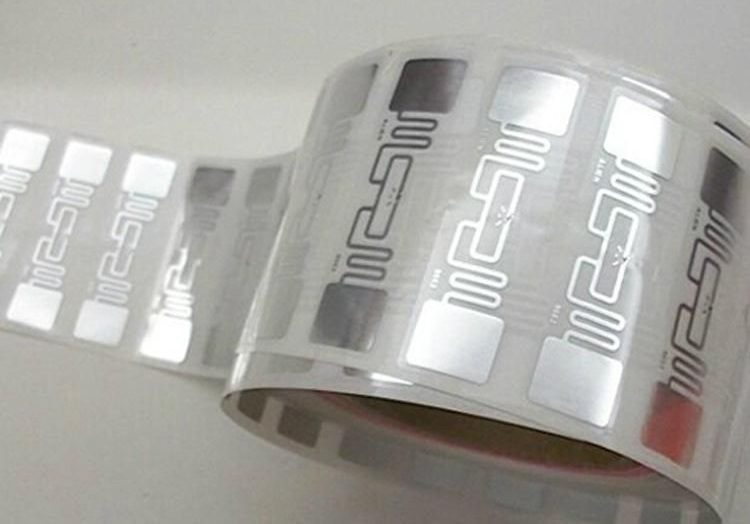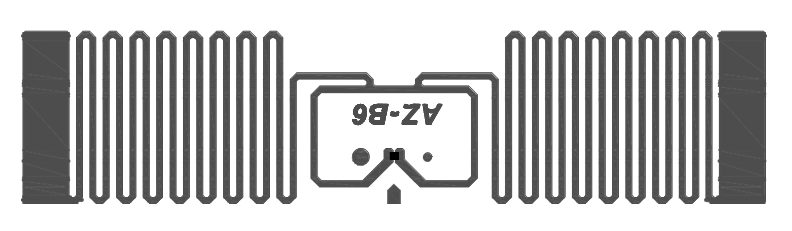
Inlay is a term specific to the RFID industry, referring to a pre-laminated product made of multiple layers of PVC or other materials containing a chip and coil laminated together; through different forms of packaging, different types of RFID labels can be made.
Inlay can be understood as an unencapsulated semi-finished RFID label.
Inlay is divided into Dry Inlay and Wet Inlay.
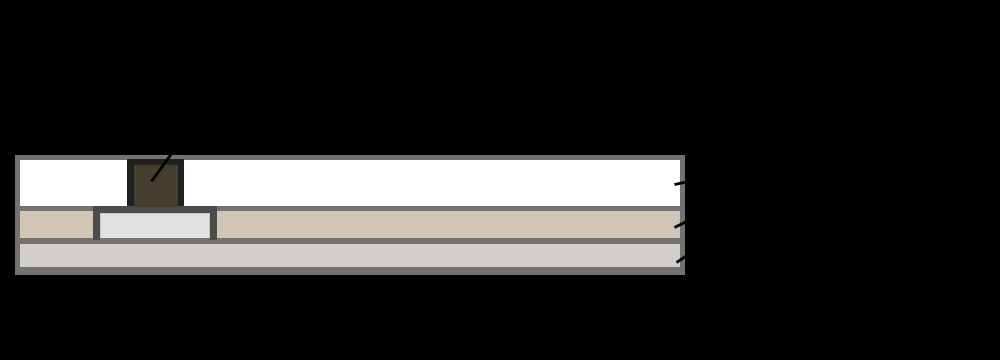
Dry Inlay has no adhesive backing; its structure is antenna + chip + chip encapsulation;
Wet Inlay has adhesive backing and can be attached directly to items; its structure is antenna + chip + chip encapsulation + surface paper + liner
| Item | Description | Remarks | |
| Manufacturer/IC | Impinj/Monza R6 | ||
| Base Material | PET | ||
| Antenna process | Aluminum etching Al(10μm)+PET(50μm) Etched Aluminum (10μm)+ PET (50μm) | ||
| Compliant standard | ISO/IEC 18000-6C/EPC Class1 Gen2 | ||
| Chip memory area | EPC | Up to 96 Bits | Read & Write (readable and writable) |
Chip memory area
Read & Write (readable and writable)
| TID | 48 Bits | Read Only (readable, not writable) |
| Unique TID | 48 Bits | Read Only (readable, not writable) |
| Password area | 0 | |
| User area | 0 | |
| Applicable carrier frequency | 860~960MHz | |
| Operating mode | Passive | |
| IC service life | 100,000 write cycles, data retention 50 years | |
| Chip ESD performance | Max. 2000V Max. 2000V |
Chip ESD performance
ESD Voltage Immunity
Max. 2000V Max. 2000V